Brutalist Zenica Yugotour
Discover Zenica's sixfold socialist growth. Tour the iron works and modernist blocks built by, and for, the Yugoslav worker. Join the tour, comrade!
Brutalist Zenica Yugotour
Optional
Extras
Airport Dropoff / Pickup
€20 per car
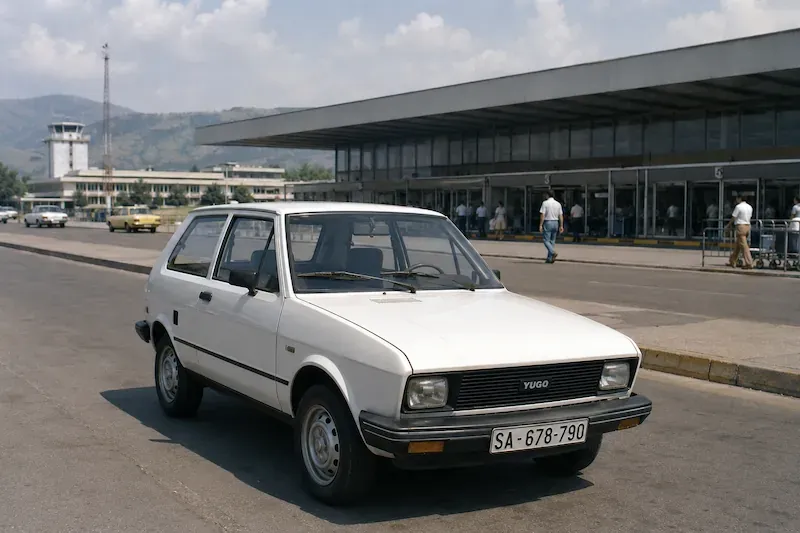
Can’t wait to discover Sarajevo? Running out of time before leaving town? Or do you just want to surprise someone in true Yugo style? Get picked up or dropped off at the airport before or after your tour in a classic Yugo. Just let us know your take-off or arrival time when you book, and we'll be there with bells on.
Smetovi Spomenik
€15 pp / €20 single
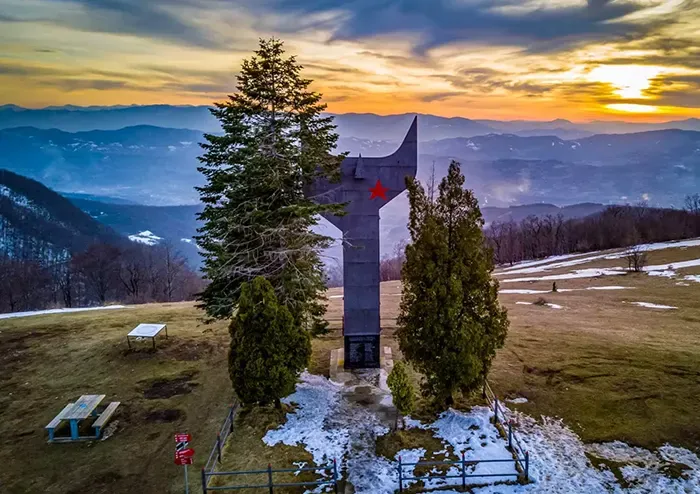
Roll up Mount Smetovi to witness one of Yugoslavia’s most striking geometric monuments, a towering tribute to the Partisans set against endless mountain vistas. This dramatic concrete landmark offers a perfect perspective on the industrial scale of Zenica below, bridging the gap between high-altitude nature and socialist grit.
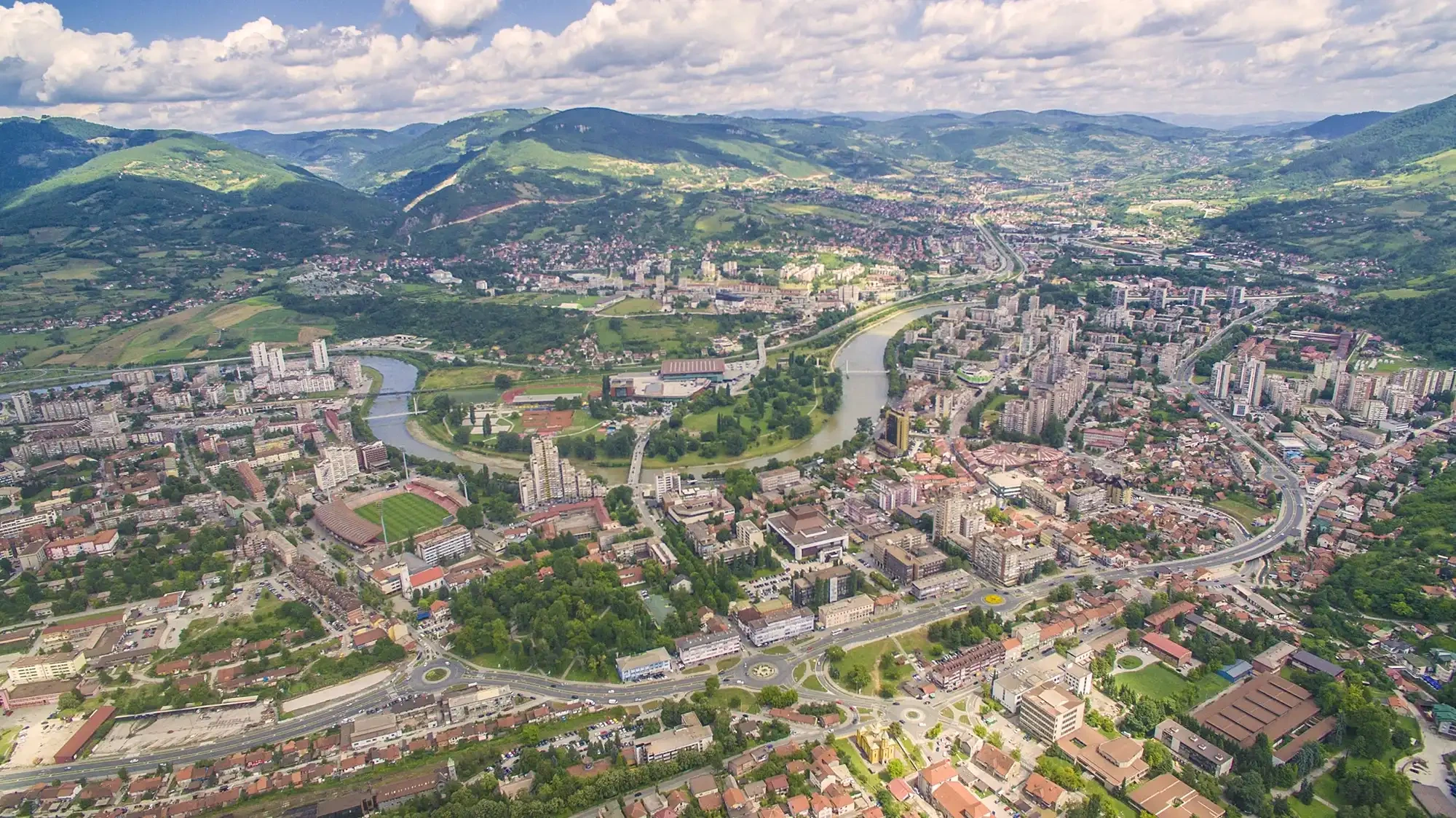
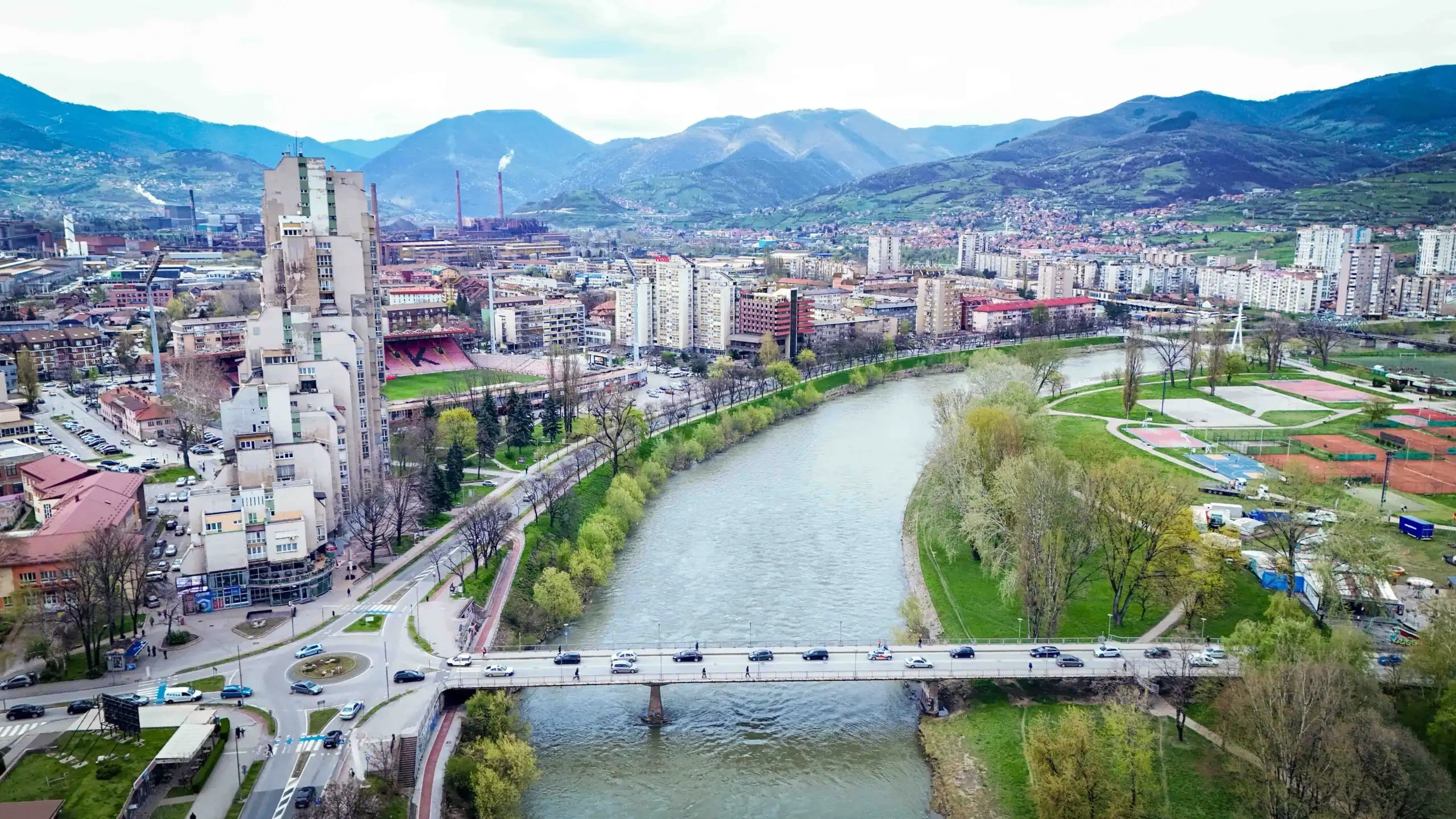
In the Tito era, Zenica paired the construction of its Iron and Steel Works with a total modernist redesign, shaped specifically around the needs of the workers. It's a perfect place to explore the socialist dream of a custom-built industrial city. Read on, comrade, and join us in the Brutalist Zenica Tour!
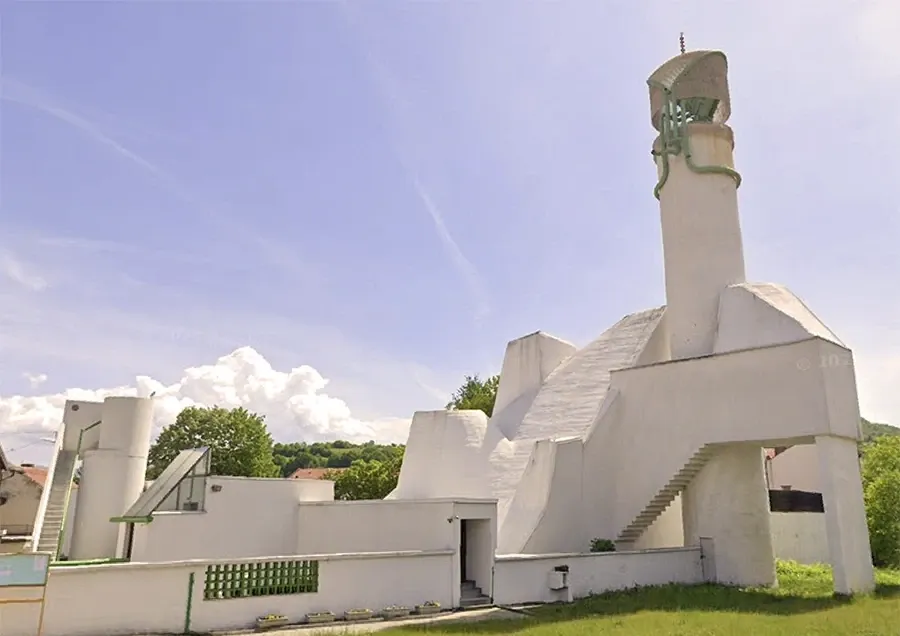
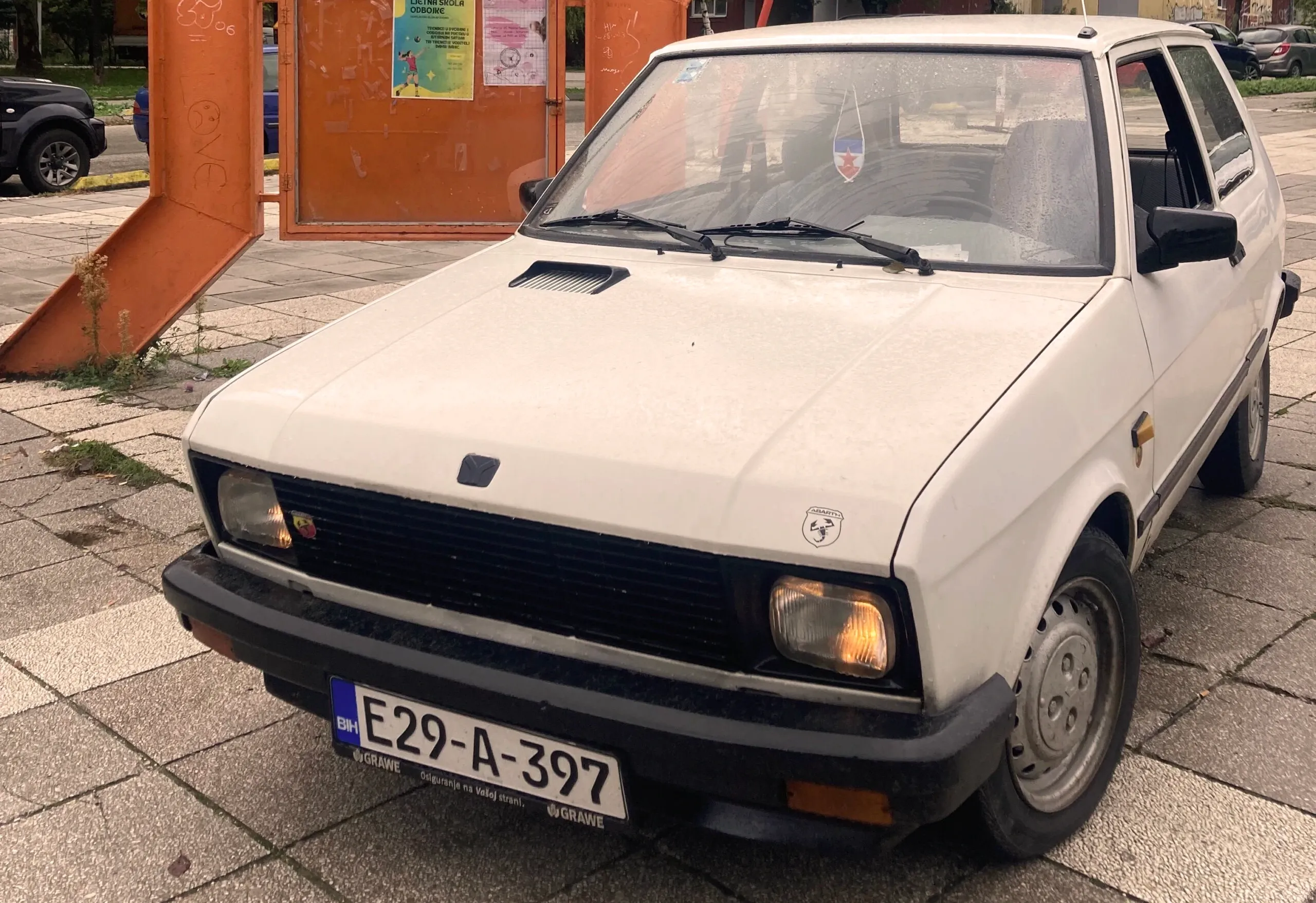
This 6-hour tour takes you on board a vintage Yugo for a deep dive into socialist-era history and brutalist architecture. On our drive to and from Zenica, we stop at two Partisan spomeniks and two futurist mosques. In Zenica, our guide takes you on a walking tour of the city’s most significant brutalist buildings and sights.
Pick-up Spot
The tour can start at your accommodation or at any other preferred spot in Sarajevo. Just let us know in your booking and the Yugo will pick you up as agreed.
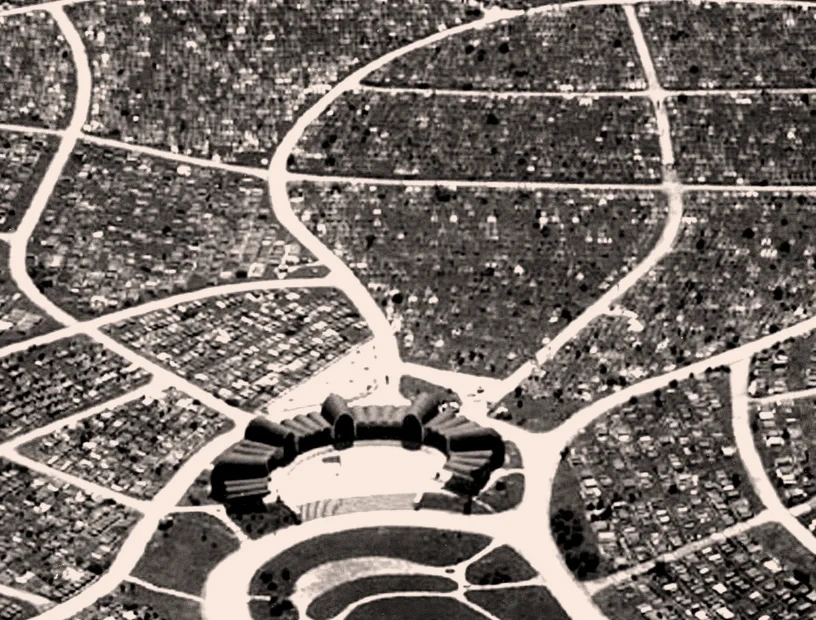
Bare Multiconfessional Cemetery
To introduce Zenica’s place in Yugoslav pop culture, we stop at the Bare graveyard. It is famously mentioned alongside Zenica’s notorious prison in the cult song "Zenica Blues" by Zabranjeno Pušenje. The song captures the grit of the city, noting that while you can eventually leave the prison, Bare is a much more permanent type of “address.”
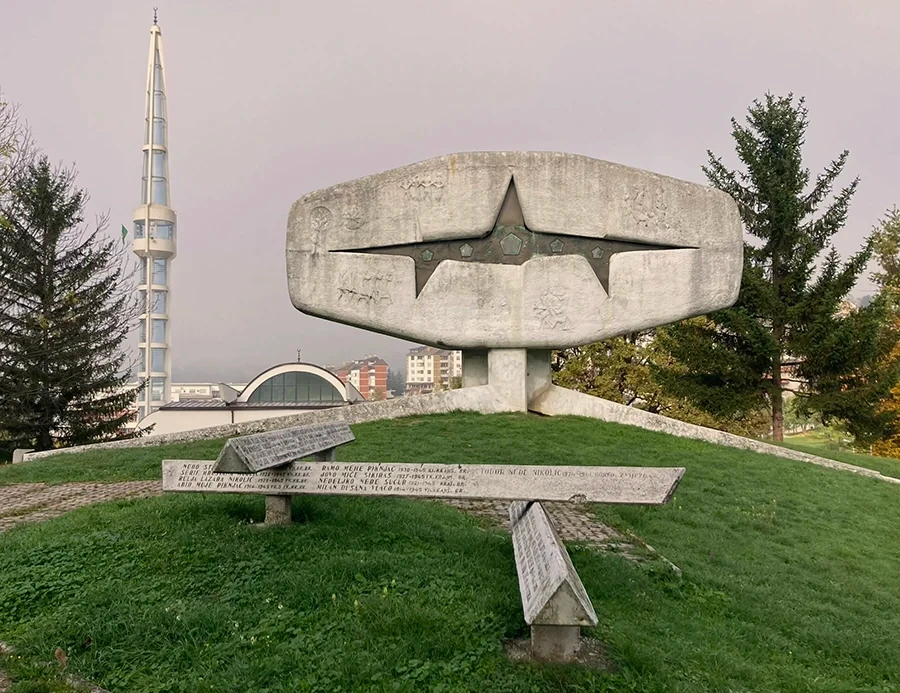
Partisan Spomenik Vogošća
In Vogošća, we stop at a classic "spomenik"—a modernist memorial honoring the Partisan resistance. These colossal monuments were built to honour the past while projecting a utopian vision of the future. This site was co-designed by Zlatko Ugljen, a master of Yugoslav architecture whose work we will encounter again once we reach Zenica.
Lamela
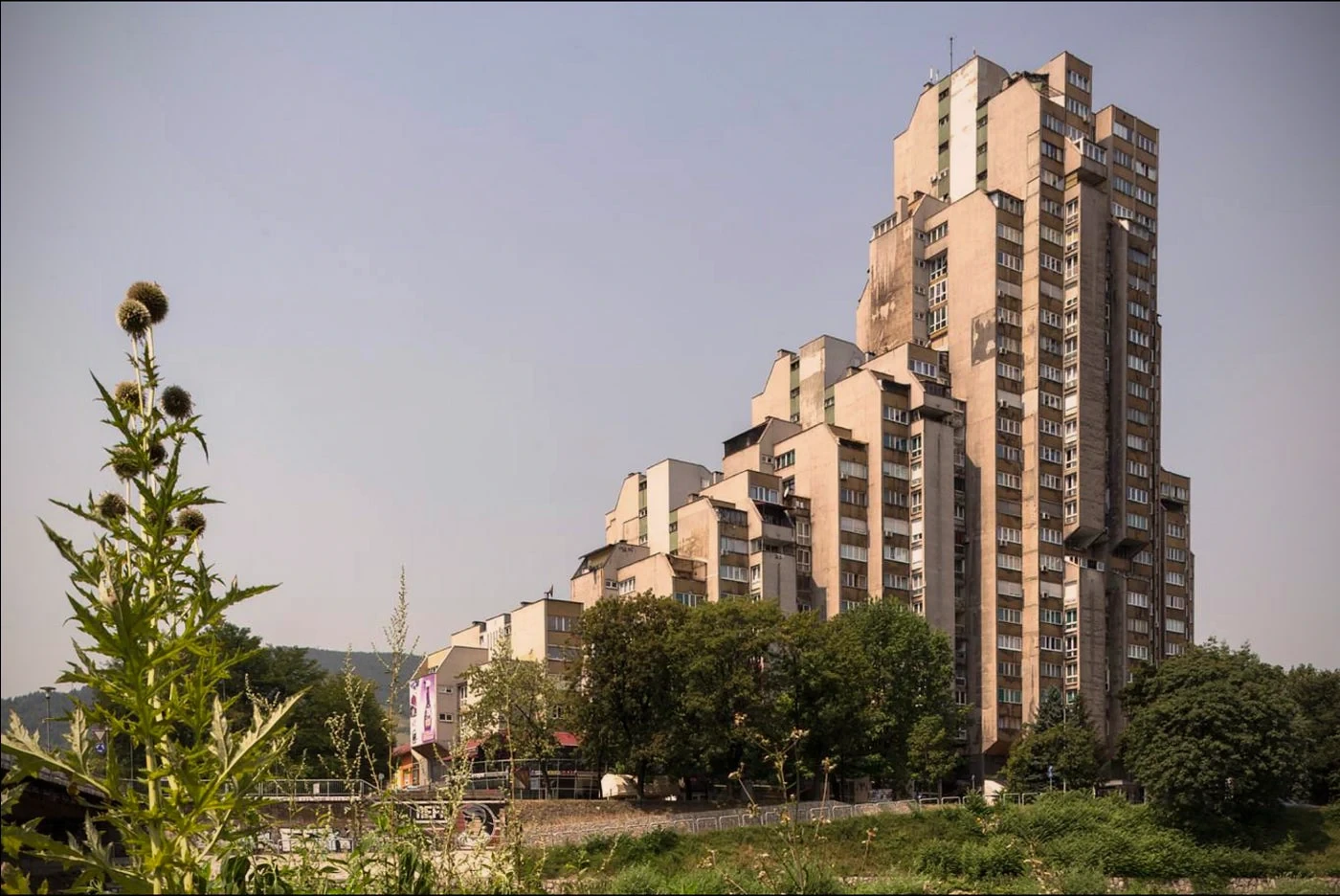
This colossal residential skyscraper is the definitive brutalist symbol of Zenica. Built in the early 1970s at the peak of the city's expansion, it was the tallest building in Yugoslavia at 101 metres. Locals were so proud of its modernity that they nicknamed it "Zenica’s Empire" after the Empire State Building in New York.
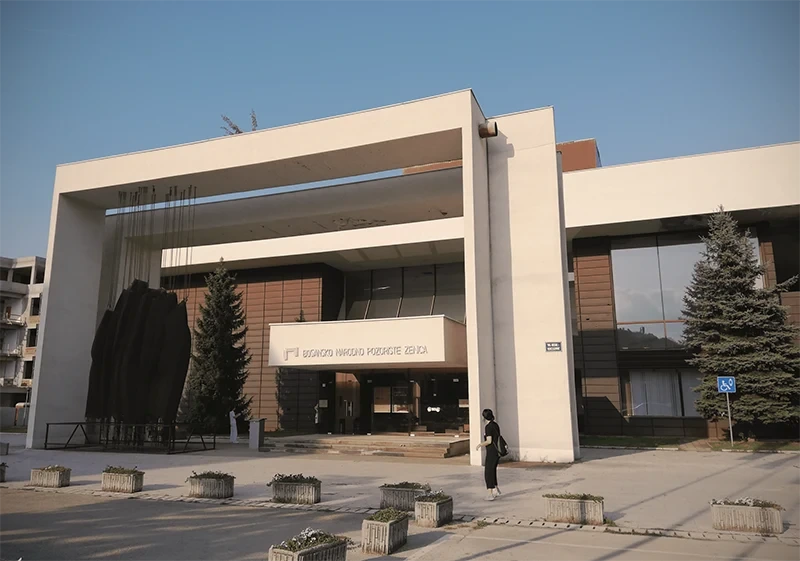
Bosnian National Theater
The Yugoslav vision of a modern city aimed to bring culture and arts to the working class. Zenica’s state-of-the-art theater was designed by Zlatko Ugljen and Jahiel Finci. Completed in 1978, it was the largest theater in the country and won several prestigious awards for its pioneering modernist design.
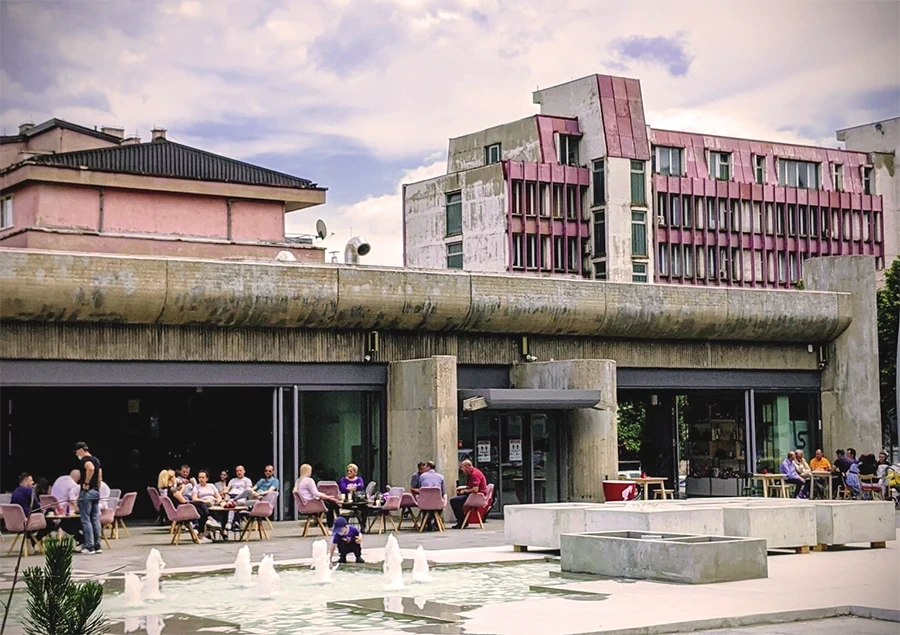
Gradska Kafana
Located on the central square, the brutalist "Gradska Kafana" (City Coffeehouse) was recently renovated as a stylish meeting place for the people of Zenica. It's a perfect example of how brutalist architecture can be successfully adapted to today’s standards while maintaining its original character. We stop here for a coffee or lunch break.
Visoko Futurist Mosque
The futuristic White Mosque in Visoko, opened in 1980, is another Zlatko Ugljen masterpiece. The architect applied avant-garde geometries to a traditional layout, featuring a quarter-shaped roof with five skylights representing the five pillars of Islam. We stop here for photos on our way back to Sarajevo.