Sarajevo Yugotour
Drive a Yugo through Sarajevo's socialist past. Explore Olympic sites, brutalist blocks, and spomeniks—all set to a YU-ROCK soundtrack.
Sarajevo Yugotour
Optional
Extras
Airport Dropoff / Pickup
€20 per car
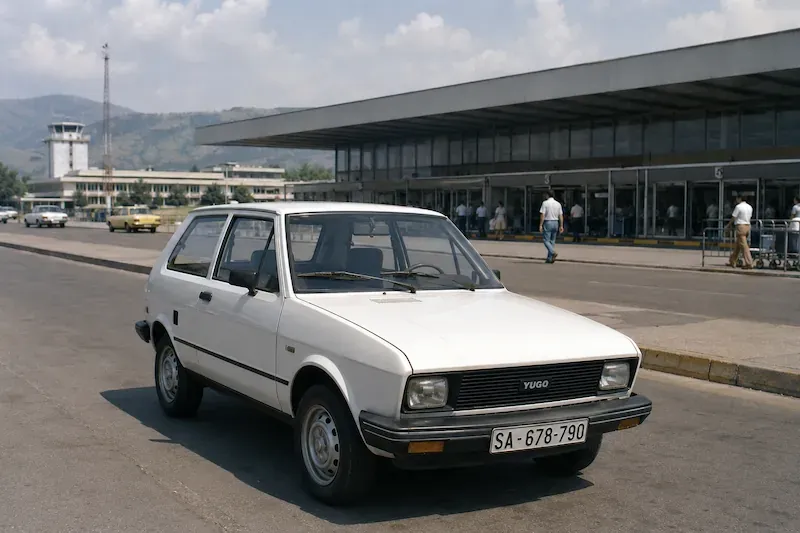
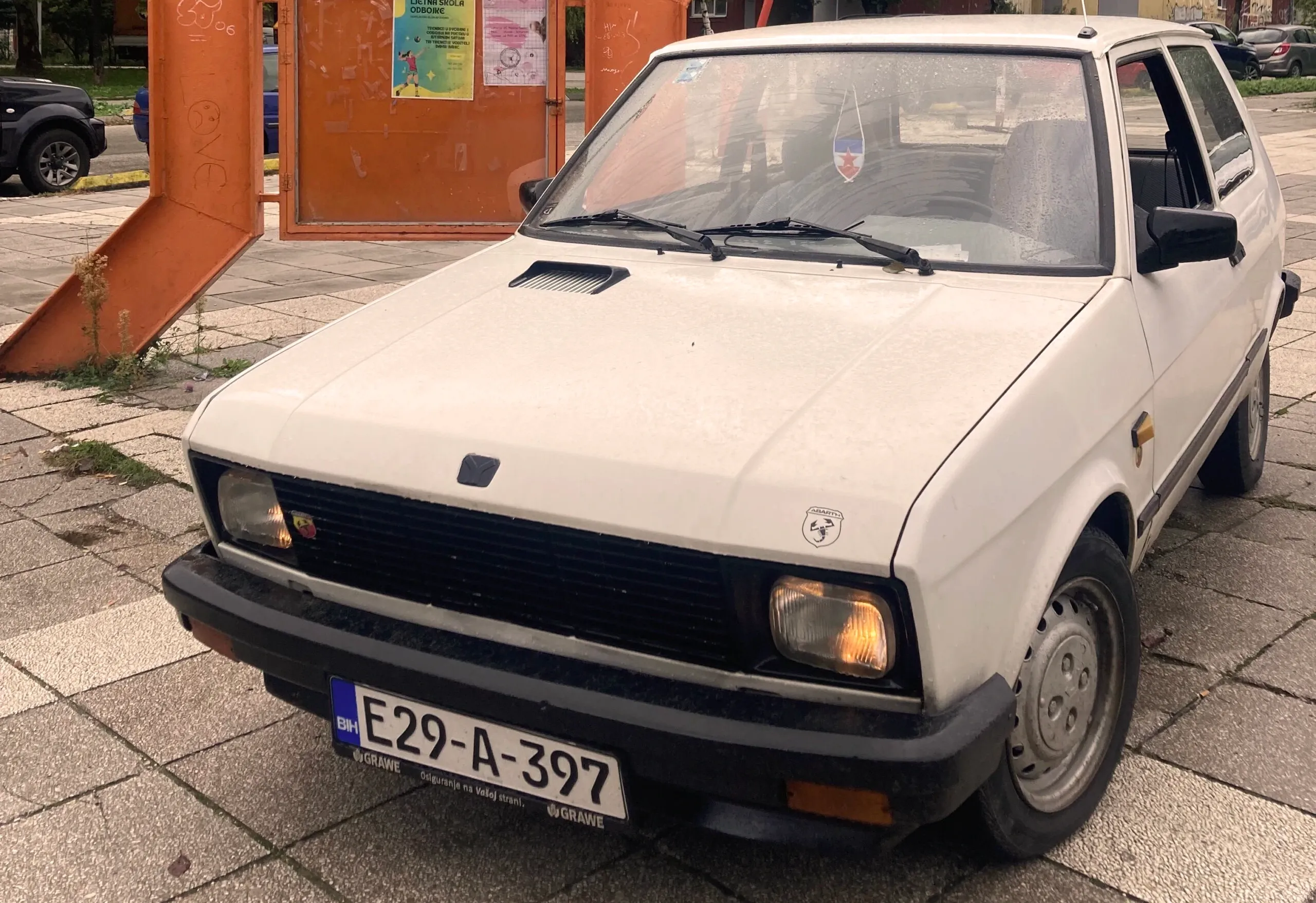
Can’t wait to discover Sarajevo? Running out of time before leaving town? Or do you just want to surprise someone in true Yugo style? Get picked up or dropped off at the airport before or after your tour in a classic Yugo. Just let us know your take-off or arrival time when you book, and we'll be there with bells on.
Trebević Cable Car
€15
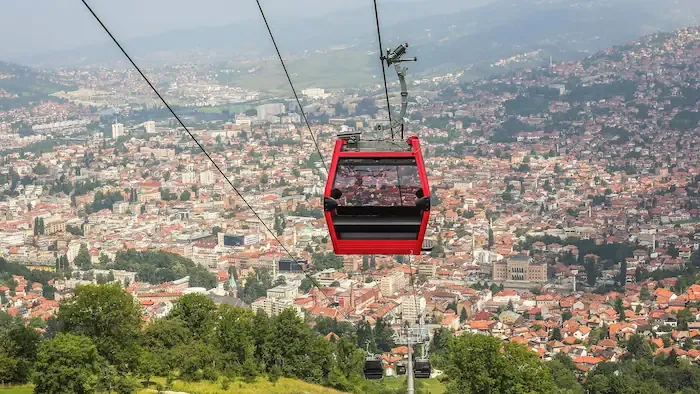
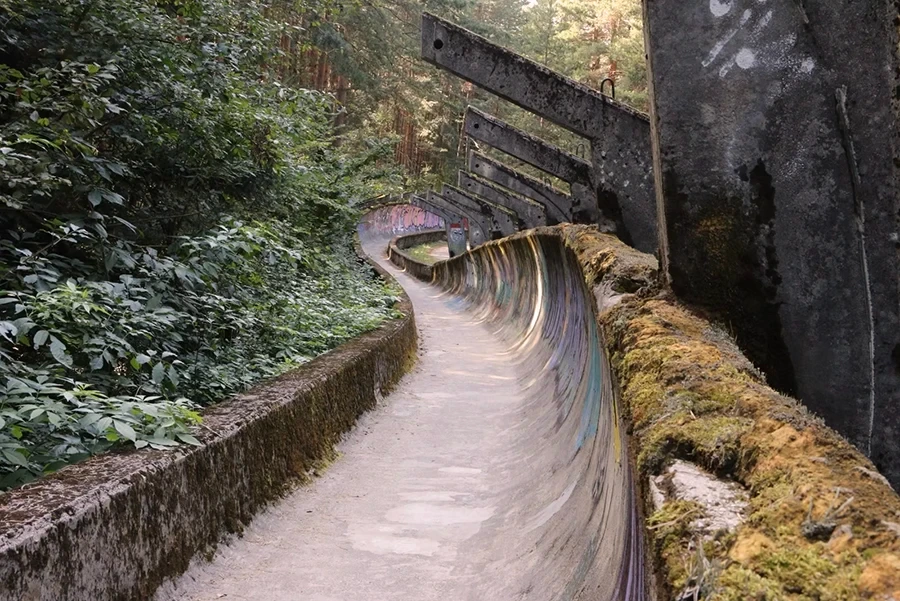
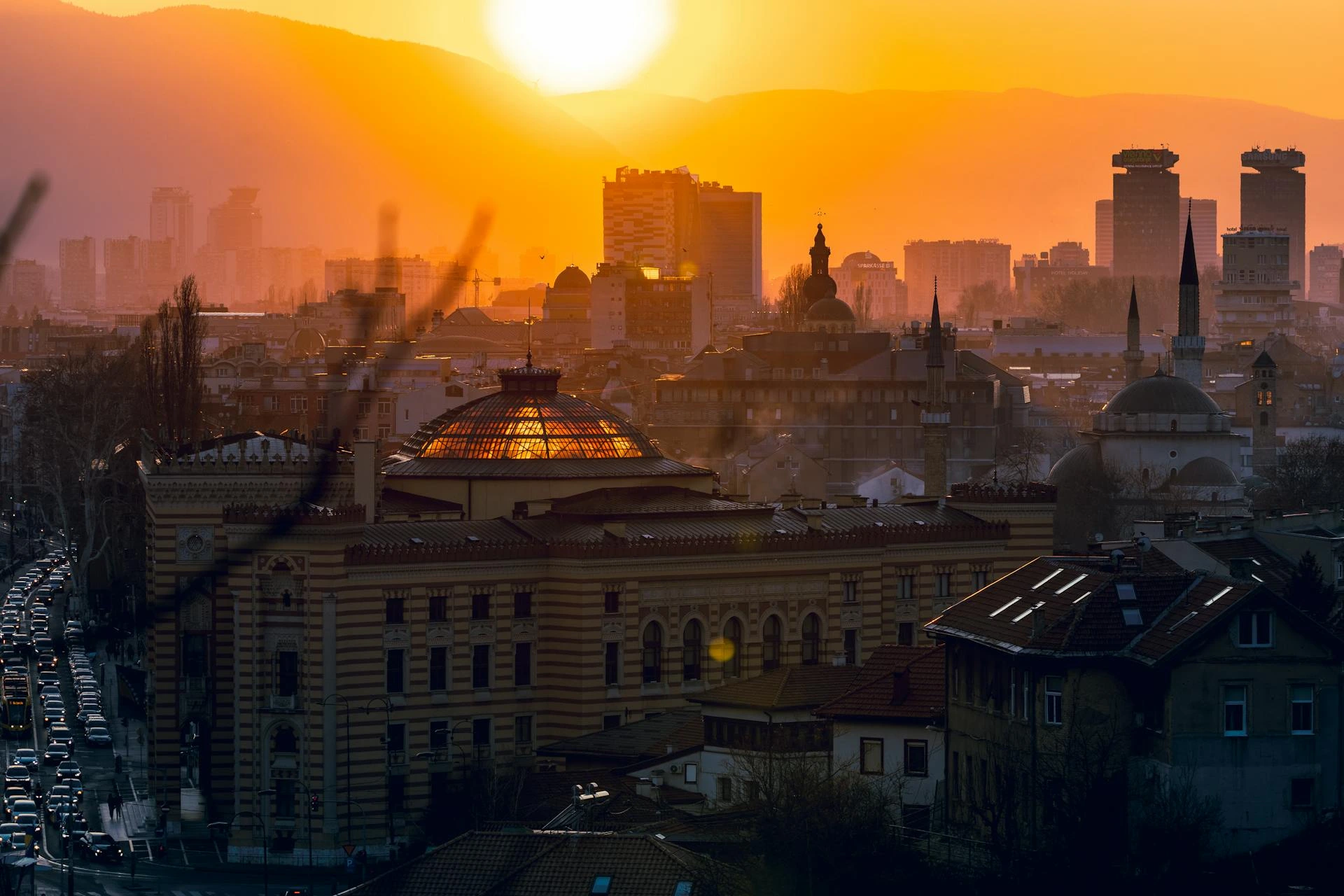
Take in a panoramic view of Sarajevo’s socialist sprawl as you glide toward the summit in the rebuilt Olympic cable car. It's the most scenic way to reach the abandoned bobsled track and experience the dramatic contrast between the city's brutalist skyline and the alpine forest.
Explore communist residential blocks, the ’84 Winter Olympics sites, and a true Yugoslav spomenik memorial. Listen to Yugoslav rock music on the way and explore its roots in the EX-YU Rock Center.
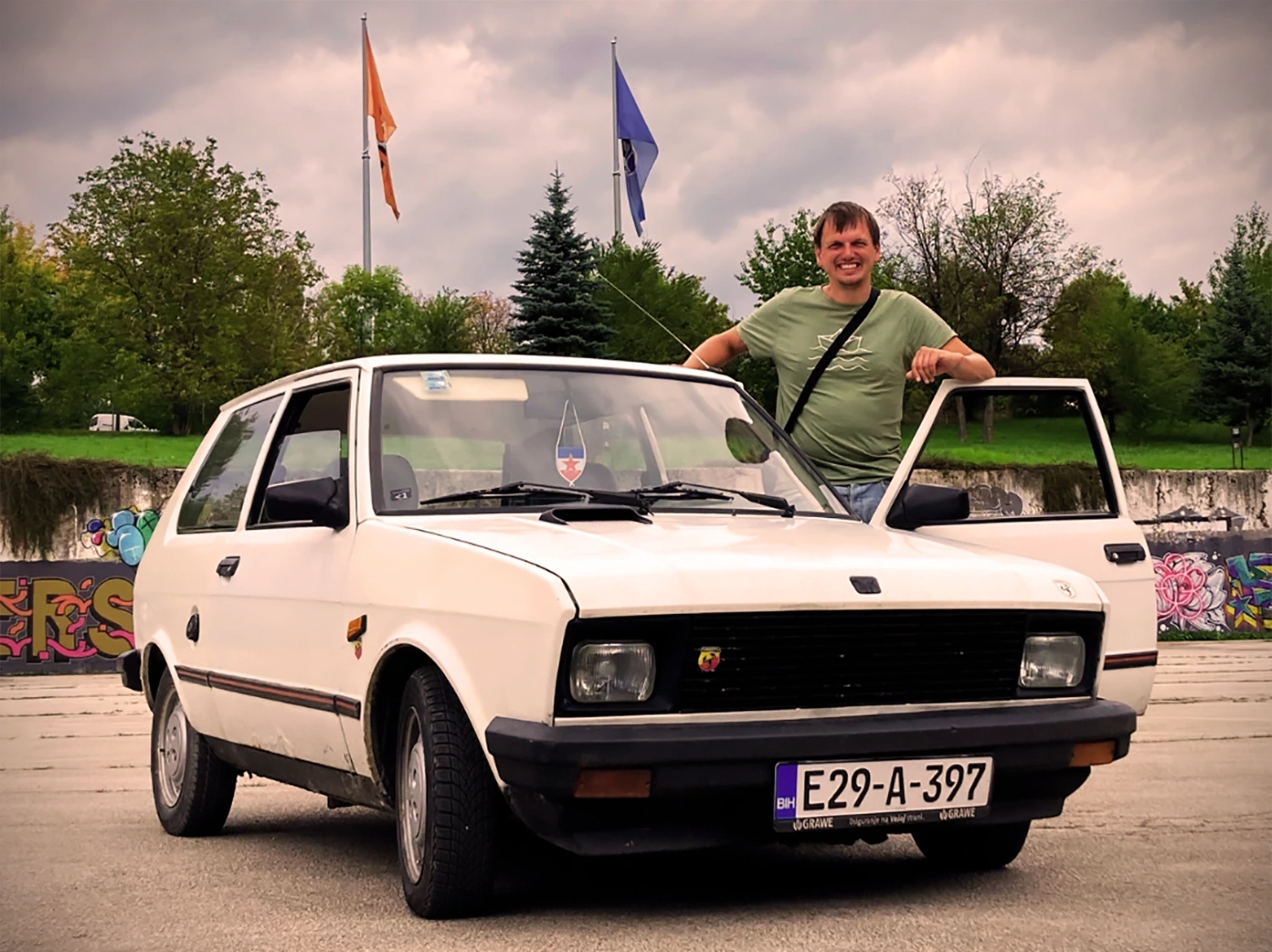
This 4-hour tour guides you through the history, architecture, and pop-culture of Yugoslavia in an engaging and interactive way, driving a vintage Yugo car to the most significant buildings and sights from the Yugoslav era in Sarajevo. The Sarajevo Yugo Tour is our signature tour and the perfect way to explore the socialist-era layers of architecture outside the city center.
Starting Point
The tour can start at your accommodation or any other preferred spot in Sarajevo. Just let us know in your booking and the Yugo will pick you up as agreed.
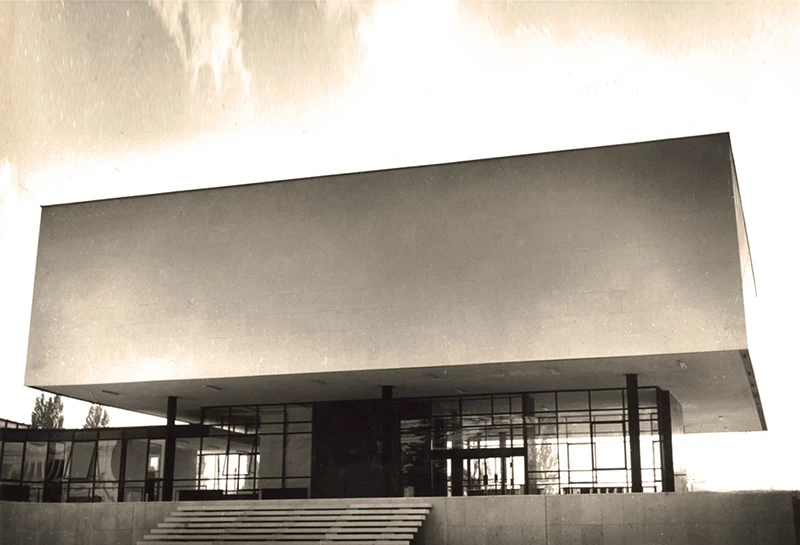
Skenderija
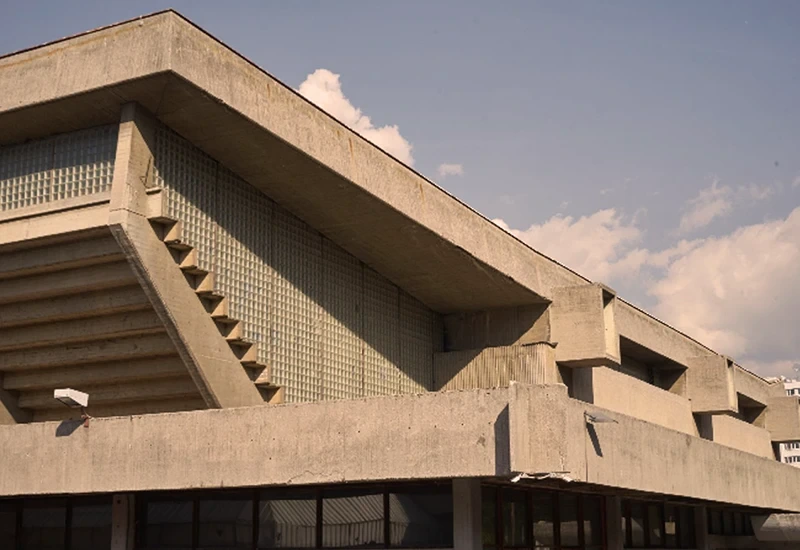
Opened by President Tito in 1969, Skenderija was awarded as Yugoslavia's best architectural achievement that year. This multipurpose facility features a concert hall, arena, shops, and an art gallery. Its legendary "House of Youth" concert hall became a cult venue for the Sarajevo rock scene. We stop here to explore the roots of Yugoslav rock music at the EX-YU Rock Center.
Ciglane
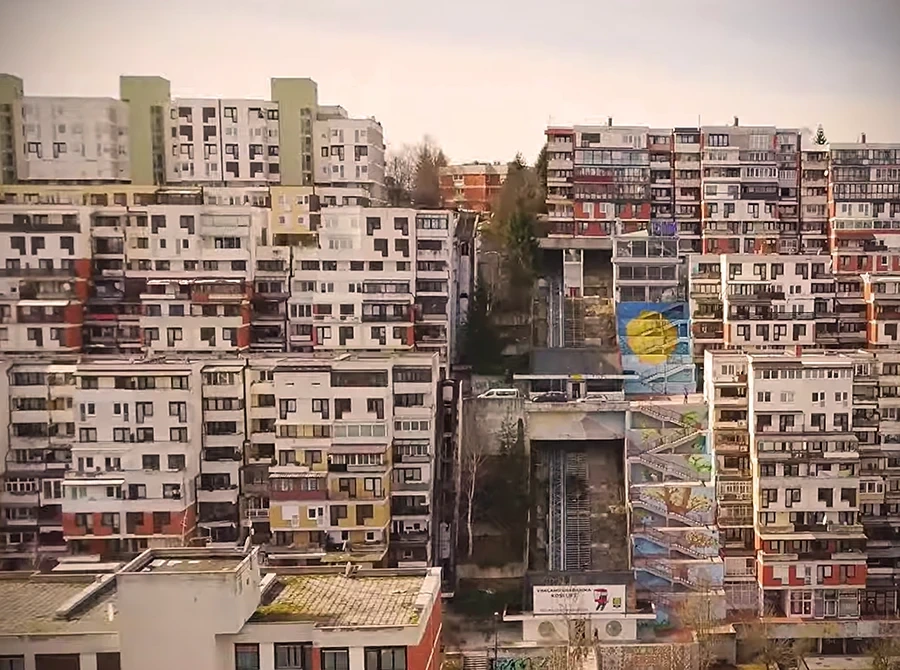
Ciglane was designed to fulfill the socialist urban vision of making housing and essential services immediately available to the working class. The ground level forms a self-sufficient community with easy access to cafes, schools, and parks. An uphill funicular connects this level with uniquely terraced residential blocks. We stop here to explore this vision and take the funicular back in time.
New Sarajevo
New Sarajevo’s uptown neighborhoods form the modernist counterpart to traditional Baščaršija. Starting from Marindvor, we find significant buildings by “Sarajevo circle” architects: Juraj Neidhardt (Parliament), Boris Magaš (History Museum), and Ivan Štraus (Holiday Inn). We stop here to marvel at the concrete and glass, visit the History Museum, and grab a coffee at the famous Tito Café.
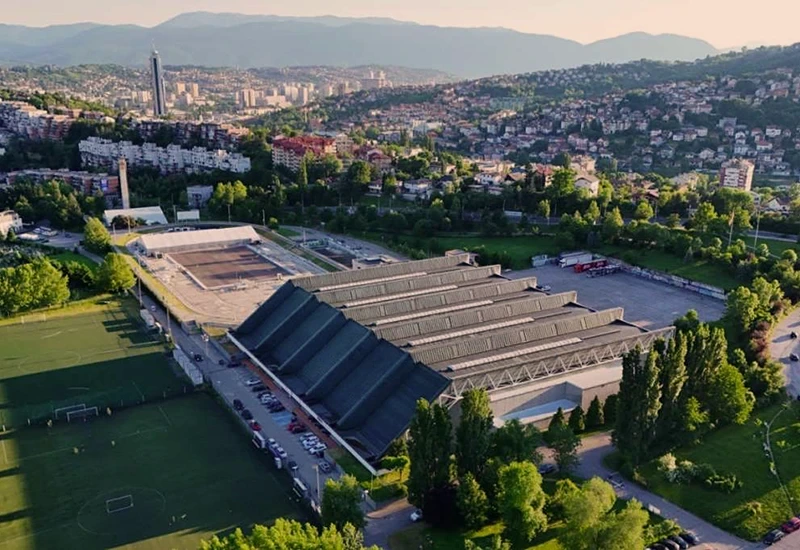
Zetra Olympic Hall & Koševo Olympic Stadium
The 1984 Winter Olympics was a milestone for Yugoslavia, bringing massive investment in architecture and infrastructure. These games were unique for avoiding the Cold War boycotts seen in Moscow and Los Angeles. We will see the Zetra Olympic Hall and the Koševo Stadium where, if you dare, you can take the Yugo for a spin yourself.
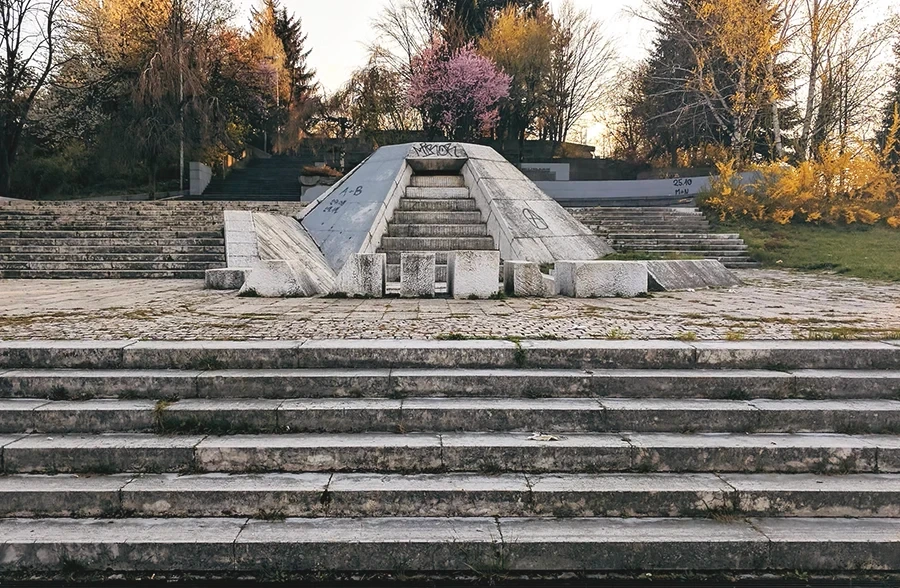
Vraca Spomenik Memorial
Located on the slopes of Mount Trebević, Vraca commemorates the local Partisan fighters and civilian victims of the Second World War. We stop here for a deep dive into Yugoslav memorial culture, which used a unifying narrative to honor victims—from civilians to national heroes—while maintaining a central role for Marshal Tito in the hierarchy of remembrance.
Bobsled Track
Nestled in the pine forest of Mount Trebević are the remains of the 1984 bobsled track. Innovative for its time, the facility could be used as one large track or three smaller ones. Designed to be both competitive and accessible to locals, we stop here so you can walk through the remains of this iconic concrete structure.